Our projects tell the stories of how we deliver a lasting impact for our clients.Explore some of our favorites
The rapid growth of AI is driving unprecedented demand for high-energy data centers. To keep pace, today’s hyperscale operators and data center developers must deliver projects on expedited schedules – often faster than electric utilities can provide the required infrastructure. As a result, many are implementing on-site gas generation to meet their power needs. These solutions also help protect residential utility customers from bearing the cost of utility infrastructure upgrades through rate increases.
While this shift creates new opportunities for operators and developers, it also makes careful technology and manufacturer selection more important than ever. The right power solution depends on a variety of factors, including project goals, location, local regulations, fuel availability, and long-term operational priorities. In this article, we’ll explore the technologies most commonly used to power large-scale facilities and outline the key considerations for selecting the right solution.
Natural gas remains one of the most widely adopted solutions for supporting today’s utility-scale power demands. Several natural gas generation technologies are commonly deployed to support today’s utility-scale power demands, including gas turbines, gas reciprocating engines, fuel cells, and linear generators. Each offers distinct advantages, making a comprehensive comparative analysis essential before choosing a technology.
Key evaluation factors include:
Each category includes multiple technical considerations – from equipment uptime and fuel flexibility to permitting requirements and available incentives – that can influence long-term performance and operating costs. For a closer look at each evaluation factor and why it matters, click here.
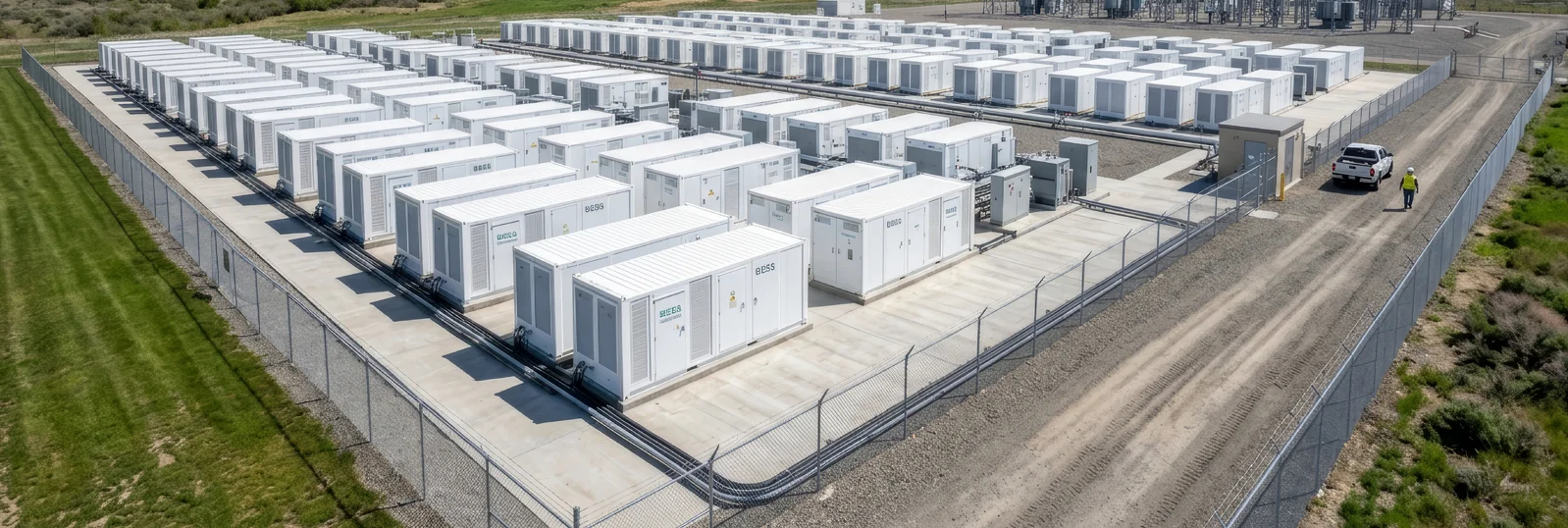
While on-site natural gas generation provides dependable primary power, it is increasingly paired with Battery Energy Storage Systems (BESS) and, in some cases, Solar Photovoltaic (PV) systems to create integrated microgrids. Together, these technologies improve reliability by responding to load fluctuations and maximizing the value of on-site energy resources, helping facilities meet the resilience demands of Tier IV data centers.
Battery storage is also becoming a more strategic component of energy infrastructure. Historically, battery systems were designed for short-duration use, typically providing one to four hours of storage. Today, long-duration battery technologies are becoming more viable, with some systems capable of supporting up to 12 hours of operation.
For hyperscale data centers and other large energy users, these systems can reduce peak utility demand and support interruptible utility service programs – particularly as permitting new diesel backup generation becomes more challenging in many jurisdictions.
No single technology is the right answer for every facility. The most effective energy strategies usually combine multiple technologies to meet specific operational objectives. A data center may require utility service, on-site generation, battery storage, and demand response capabilities, while a hospital may rely on firm utility service, a central boiler plant, and emergency generation.
Hybrid energy strategies allow facilities to optimize reliability and flexibility while avoiding premature investments in technologies that may not align with future facility needs. The key is evaluating each technology against the facility’s operating requirements rather than selecting a solution based on a single performance metric.
To discuss how your facility can evaluate different energy infrastructure technologies, email me at psposato@wbengineering.com.