Our projects tell the stories of how we deliver a lasting impact for our clients.Explore some of our favorites
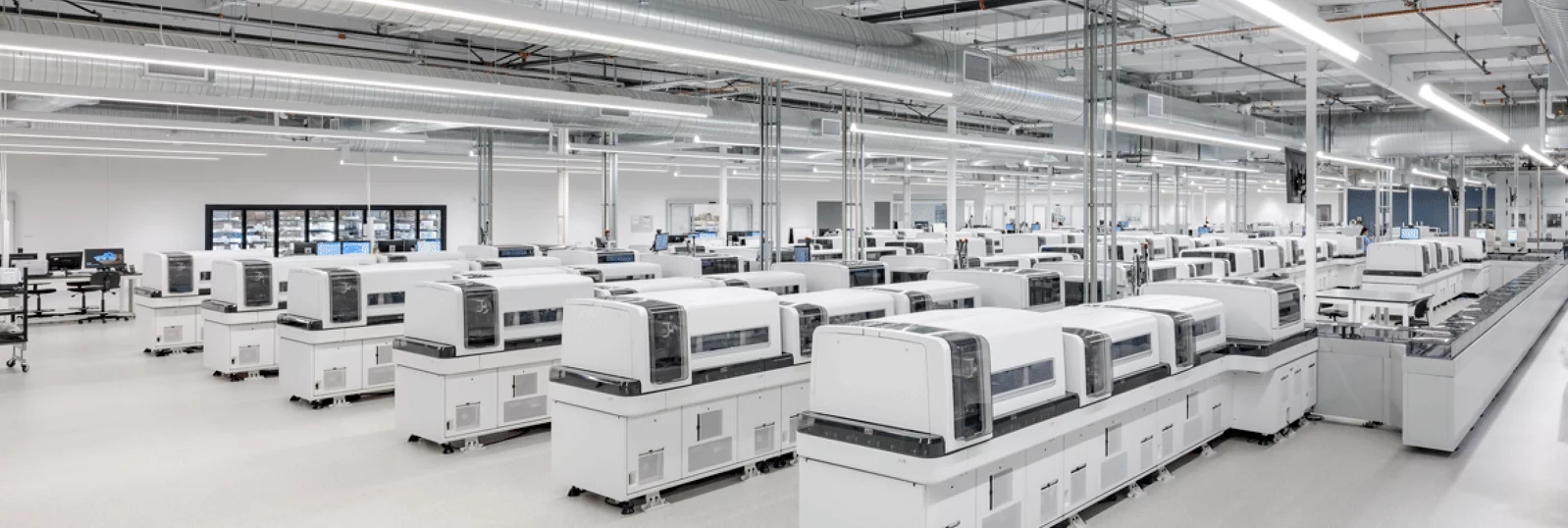
One of the most important decisions in manufacturing facility design is whether production should use an open process, a closed process, or a hybrid approach. In science, technology environments, the choice between open vs. closed manufacturing directly affects contamination control, cleanroom classification, airflow strategy, operating costs, and long-term scalability.
An open process includes any manufacturing step that exposes the product to the surrounding environment, even for a second. These steps may involve manual handling, operations in biosafety cabinets, or open workstations. Because the product is exposed, the room itself must provide protection. Typically, this means higher cleanroom grades, increased air changes, and stronger HVAC systems. Open processes usually occur during the earlier stages of manufacturing or when product enclosure isn’t feasible.
A closed process keeps products fully contained within equipment. Since the product is isolated, the surrounding room’s systems are less necessary in controlling contamination.
Closed processes reduce risk while allowing lower cleanroom classifications and flexibility for more energy-efficient HVAC strategies. As manufacturing scales, we favor closed systems for consistency, safety, and operational efficiency.
The choice between an open or closed process influences nearly every aspect of manufacturing facility design, from cleanroom classification and ISO cleanroom standards to airflow strategy, utility planning, material movement, and long-term flexibility. In GMP environments, it also plays a critical role in supporting contamination control, operational resilience, and validation expectations.
Open processes often require higher cleanroom classifications, closer alignment with ISO cleanroom standards, larger air-handling systems, more filtration, and higher operating costs. Air strategy is the big differentiator. Open viral processes require 100% once-through air, while closed systems allow air recirculation, which reduces energy use.
Open processes are best when flexibility and hands-on handling are needed or when the process is still developing. Closed processes are the better option when using established manufacturing processes, materials are expensive, and when long-term efficiency is imperative.
Most facilities employ a hybrid approach, closing as many steps as possible while designing the environment to support the remaining steps.
Open and closed processes are not opposing strategies. Understanding when to use each allows teams to build manufacturing spaces that are efficient and scalable as needs change.
Have a question about your science and technology manufacturing space? Connect with me at rdoyle@wbengineering.com.