Our projects tell the stories of how we deliver a lasting impact for our clients.Explore some of our favorites
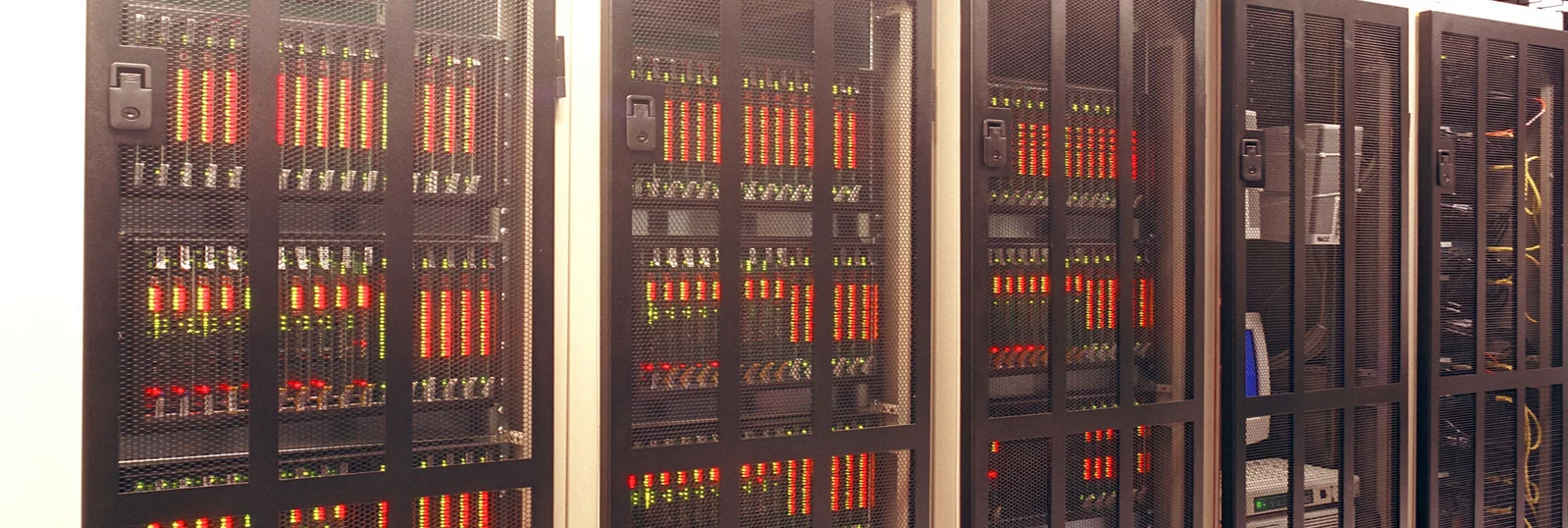
Data centers release vast amounts of heat into the environment. Every watt that powers a server eventually becomes heat that needs to be expelled. According to the International Energy Agency, data centers account for roughly 2% of all electricity use (World Economic Forum). With this in mind, the question is simple: Can we reuse that heat rather than letting it dissipate into the air?
The idea of capturing waste heat is more complicated than redirecting a pipe. Why? Firstly, cooling systems move heat, rather than creating it. Data centers use mechanical systems to transfer heat away from IT equipment, usually through chilled or condenser water loops. The water leaving those systems is usually around 95°F, which is too cold to be useful for directly heating other spaces or industrial processes.
From an outside perspective, it may seem logical to reuse heat within the facility itself. Even though data centers generate a tremendous amount of heat, they rarely have much internal use for it. Unlike office or industrial buildings, there’s no process that needs heating.
There’s also the issue of reliability and control. Data centers are built for uptime, “five nines,” or 99.999% availability. Connecting a cooling loop to an external system introduces variables outside the operator’s control, which can compromise performance and contractual obligations.
Then the seasonal and economic limitations play a role. Using waste heat for something like greenhouse heating works for part of the year, but not year-round. And until the outlet temperature climbs higher, it’s difficult to justify the cost of complex heat-recovery systems.
Finally, siting constraints are playing a larger role. As data centers get bigger and Not In My Backyard (NIMBY) opposition grows, facilities are increasingly being moved away from areas where using waste heat may be suitable. And most zoning regulations do not differentiate between a 10MW data center (which could be near a hospital) and a 1GW data center (which is its own multi-acre campus).
Despite the hurdles, heat reuse is possible. Hospitals and district energy systems have steady, predictable heating loads and could benefit from data center waste heat. The challenge lies in ownership, maintenance, and location. The first step is to ensure data center operators and end users are physically close and operationally aligned, which likely requires zoning exceptions that allow most-sized data centers to be collocated near the areas with constant heat demand.
New construction also creates more opportunities than existing facilities. Considering the hospital application above, retrofitting a heating system to rely on water-source heat pumps is costly and may not be feasible, whereas a new building could incorporate that design concept from the beginning.
The rise of liquid cooling, the process of using liquid to absorb and transfer heat, has the potential to change everything. Cooling loops that once operated at 45°F to produce 55°F supply air now run much warmer. Today’s systems commonly use 65°F water to produce 75°F air, and soon, servers could accept 110°F inlet water and send back 120°F return water (Data Center Dynamics). That’s the tipping point. Once outlet water surpasses 120°F, it becomes high-quality heat, which is usable for space heating, domestic hot water, or even local district energy networks.
As technology evolves, data centers have the chance to redefine their role in the energy ecosystem. Smaller, mixed-use facilities may reuse their own waste heat internally, while larger campuses might supply it to neighboring buildings or communities.
Want to discuss opportunities to use heat as an asset? Send me an email at bstewart@wbengineering.com to start the conversation.